

The Words We Use Matter
In feline medicine, language shapes how we understand behavior, communicate with caregivers, and support a cat’s emotional wellbeing.
Cats communicate largely through body language, behavior, and subtle cues. What may appear to be “difficult” or “uncooperative” behavior is often a response to fear, frustration, pain, or other emotions that influence how a cat interacts with their environment. By using terminology that focuses on emotional states rather than judgment-based labels (e.g., spicy, fractious, naughty), veterinary teams can better recognize a cat’s needs and adapt their approach accordingly.
Understanding Engaging and Protective Emotions
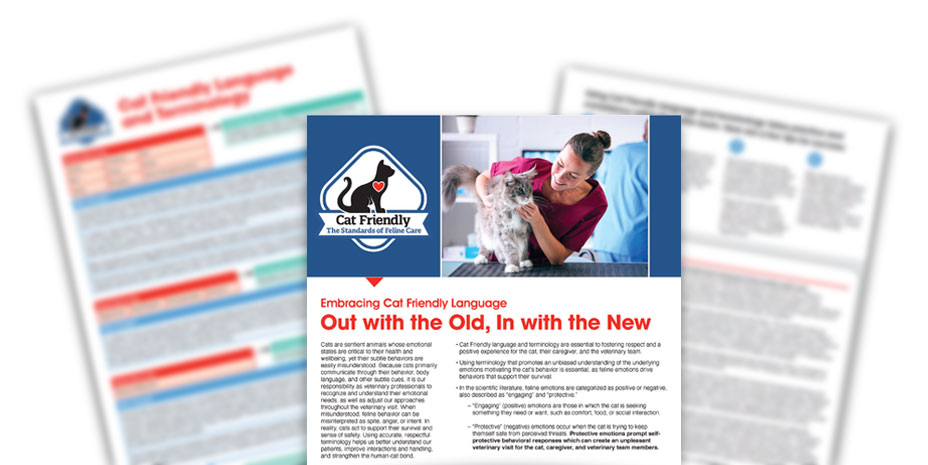
Although “positive” and “negative” are scientific terms, the everyday language often associated with them can unintentionally introduce value judgments, making a cat’s disposition or behavior seem good or bad instead of viewing it as a normal emotional response. Using the terms “engaging” and “protective” helps more accurately reflect the underlying emotional state the cat is experiencing.
“Engaging” (positive) emotions are positive emotional states that motivate cats to actively seek resources they need or want (e.g., comfort, food, social interaction), explore their environment, and participate in reward-based learning (positive reinforcement) or carrier training.
“Protective” (negative) emotions occur when the cat is trying to keep themself safe from perceived threats. Protective emotions prompt self protective behavioral responses which can create an unpleasant veterinary visit for the cat, caregiver, and veterinary team members.

The Importance of Cat Friendly Terminology
Cat Friendly terminology encourages a more accurate and compassionate understanding of feline behavior. Rather than labeling cats based on our interpretation of their actions, this approach emphasizes the emotions driving those behaviors and the ways cats attempt to maintain comfort, safety, and control.
Using consistent, respectful language can help:
- Promote better outcomes for both cats and humans
- Improve communication among veterinary team members
- Foster stronger partnerships with caregivers
- Support safer, reduced-stress veterinary visits
- Encourage individualized handling and care strategies
Explore Cat Friendly Terminology
Discover commonly used terms, preferred alternatives, and the reasoning behind these recommendations. Learn how language can help your team better understand feline behavior and provide care that reflects the needs of every cat.
Looking for More?
Continue your Cat Friendly journey with:
Cat Friendly Practice® Designation for practices committed to feline-centered care
Cat Friendly Certificates for individual veterinary professionals