

Creating a Positive Feline Healthcare Experience Does Not Begin in the Exam Room
A cat’s experience before leaving home, during transport, and after returning home can have a significant impact on stress levels, cooperation, caregiver satisfaction, and future willingness to seek veterinary care.
This resource collection is designed to help veterinary professionals extend Cat Friendly principles beyond the veterinary visit itself. The materials below provide practical guidance you can use to educate caregivers, support feline wellbeing at home, and improve the overall veterinary experience for cats and their families.
Why At-Home Preparation Matters
Many of the stressors associated with veterinary care occur before a cat ever enters the practice.
Carrier confinement, transportation, changes in routine, unfamiliar environments, and the return home after a visit can all contribute to stressor stacking, influencing both feline welfare and the success of the appointment. Understanding these factors allows veterinary teams to better prepare caregivers and create a more positive experience from start to finish.
By providing proactive education and practical tools, veterinary teams can help cats arrive calmer, reduce barriers to care, strengthen caregiver confidence, and improve long-term healthcare outcomes. Even small interventions, such as carrier training, pre-visit planning, and cooperative care techniques, can make a meaningful difference.
Featured Resources
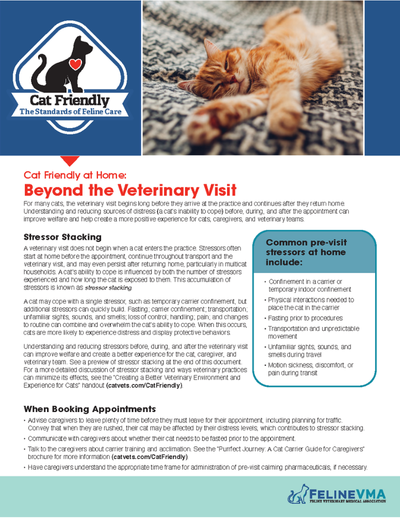
Cat Friendly at Home: Beyond the Veterinary Visit
A professional resource designed to help veterinary teams understand and address the factors that influence a cat’s experience before, during, and after veterinary visits. Topics include:
- Understanding stressor stacking and its impact on feline welfare
- Preparing for veterinary visits at home
- Transportation and travel considerations
- Pre-visit medications and when they may be helpful
- Cooperative care and positive reinforcement training
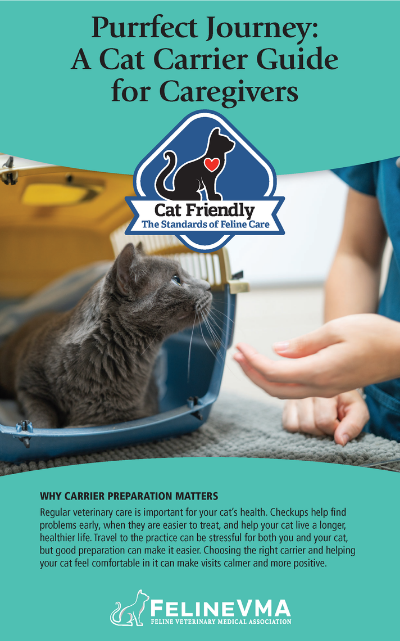
Purrfect Journey: A Cat Carrier Guide for Caregivers
A caregiver-facing brochure that veterinary teams can share with clients to support carrier training, transportation, and positive veterinary visits. This brochure provides practical guidance on:
- Choosing a carrier that supports feline comfort and safety
- Helping cats view the carrier as a familiar, secure space
- Using reward-based training techniques to encourage voluntary carrier use
- Preparing for travel and transportation with less stress
Other Veterinary Professional Resources
Behavior Modification Recommendations for Multicat Households – Catvets.com
Behavior modification can help cats learn more relaxed and desirable behaviors. Once behavior modification is implemented, it can help reduce intercat tension by redirecting cats, and rewarding more appropriate and relaxed behaviors between cats.
Other Caregiver Resources
Intercat Tension – Catfriendly.com
Living with multiple cats can be rewarding, but it also comes with challenges such as intercat tension. Intercat tension can occur after a veterinary visit due to changes in smells, appearance, and behavior. Recognizing and addressing this tension is crucial for maintaining the health and happiness of your cats.
Getting Your Cat to the Veterinarian – Catfriendly.com
Learn how to make veterinary visits less stressful by helping your cat become comfortable with carriers, transportation, and new environments before appointment day. This resource includes practical tips for creating positive carrier associations and reducing travel-related anxiety.
Your Role in Veterinary Visits – Catfriendly.com
Learn how caregiver actions and preparation can influence a cat’s comfort before, during, and after veterinary care. Topics include carrier preparation, waiting room strategies, communication with the veterinary team, and supporting recovery at home.
Cat Training Techniques for Caregivers – Catvets.com
Training your cat using positive reinforcement techniques can improve their behavior, reduce stress, and strengthen your bond. These easy-to-follow techniques use positive reinforcement to help cats learn in a way that is comfortable and rewarding for them.
Cat Caregiver Resources Library – Catfriendly.com
Explore educational brochures, guides, and tools covering feline behavior, health, preventive care, enrichment, transportation, and veterinary visits.
Tips for Medicating a Cat – Catvets.com
Helping caregivers successfully medicate their cats is an important part of improving treatment outcomes. This practical handout shares Cat Friendly approaches that reduce stress, support the human-cat bond, and make medication administration more manageable for everyone involved.
Looking for More?
Continue your Cat Friendly journey with:
Cat Friendly Practice® Designation for practices committed to feline-centered care
Cat Friendly Certificates for individual veterinary professionals