
Welcome to Cat Friendly Practice® Pro Tips and Strategies, our new article series where we will share tips and strategies to help make your practice even more Cat Friendly! We invite all of you to share your tips that work for you, your staff, and your practice with us, so we all can continuously improve how we care for cats in the veterinary practice. Whether you have been a Cat Friendly Practice® for 12+ years or are a new one, we are positive that you all have some good ideas that would benefit everyone. Please send in your Pro Tips and Strategies to info@catvets.com and in the subject line type ‘Cat Friendly Practice® Pro Tip/Strategy.’
January 2026
Update on the Cat Friendly Hideout Corner at Purrfect Care Feline Medical Center
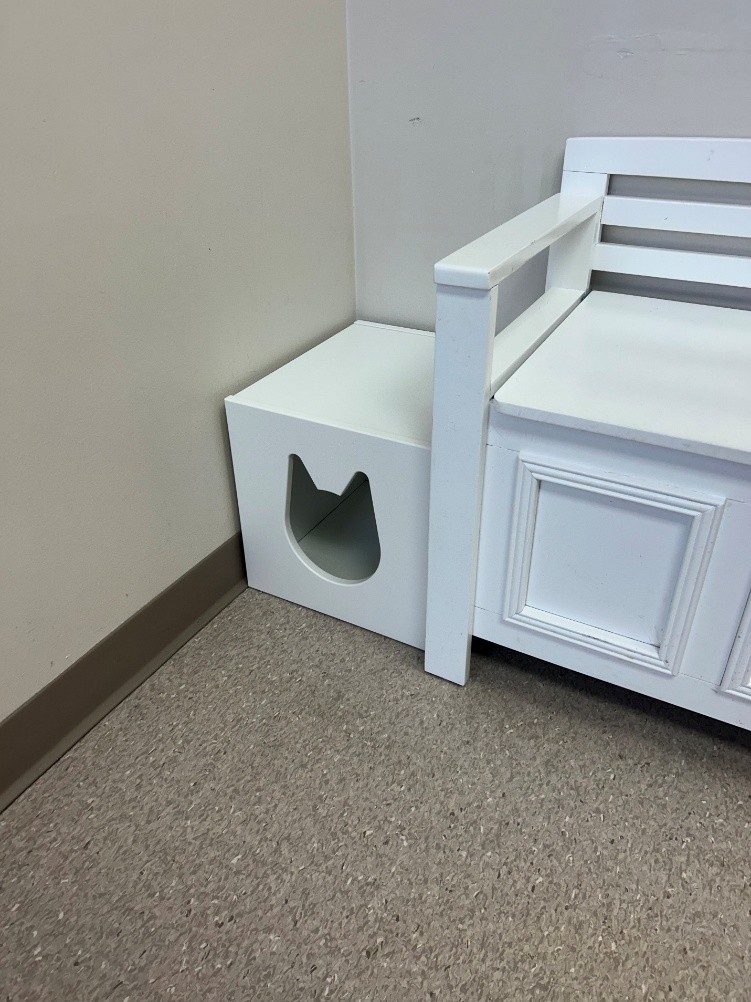
In the last Cat Friendly Practice® newsletter, Dr. Guess shared the Cat Friendly Hideout Corner at her practice as well as a few other Pro Tips!
She recently found these adorable cat houses at IKEA that she wanted to share with everyone. So far, they are a winner with the kitties at her practice! You can open from the top, which is a much easier way to gain access to the cats.
Fear of Falling — Creating Stability on Exam Tables, Scales, and Wherever You Handle Cats
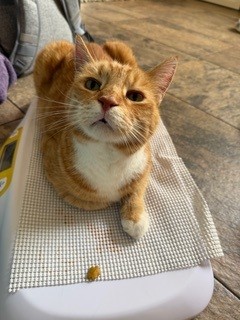
The fear of falling is scary for cats, and there should be a non-slip surface anywhere you handle cats. Julie Liu, DVM, My Family Cat Mobile veterinarian and Cat Behavior Consultant, and Dr. Guess provided some tips about creating stability with the use of non-slip products.
Dr. Liu uses a non-slip liner on a no-tip baby scale to create a stable surface when she weighs her patients. Additionally, she states that you can further decrease stress and support cats’ choice by coaxing them onto the scale rather than picking them up and placing them on the scale. She frequently tosses a dry treat or places a Churu-smeared Lickimat on the scale so the cat can weigh themselves.
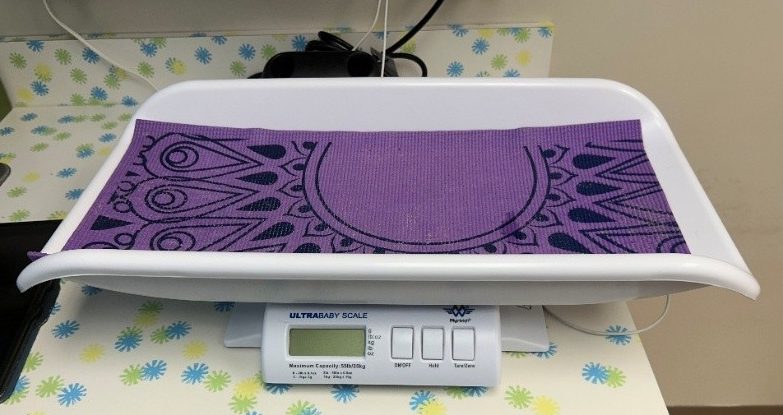
Dr. Guess uses yoga mats on the scales at her practice. She stated they buy inexpensive yoga mats and cut them to fit the scales. The mats are easy to clean between patients and give the cats a better sense of stability when we lure them up there with food. If they are not successful in luring them with food, then they will weigh the carrier alone, and then the carrier with the cat to get their proper weight.
Article and images courtesy of Drs. Liza Guess and Julie Liu
Exam Room — Distraction and Comfort
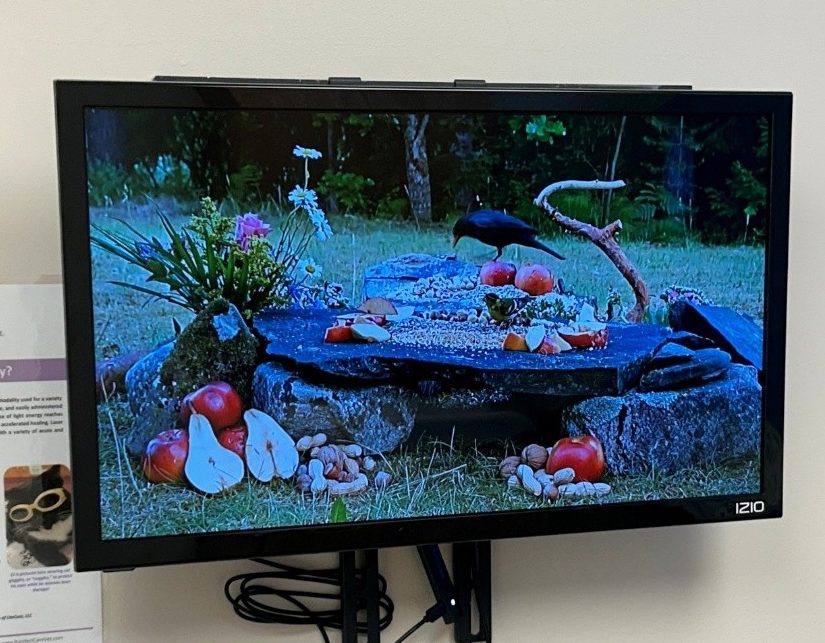
At Purrfect Care Feline Medical Center, they have TVs, and they have started playing “Cat TV” in all the exam rooms for appointments. Additionally, Dr. Guess also uses iPads and Cat TV to distract kitties that aren’t food motivated during their exams.
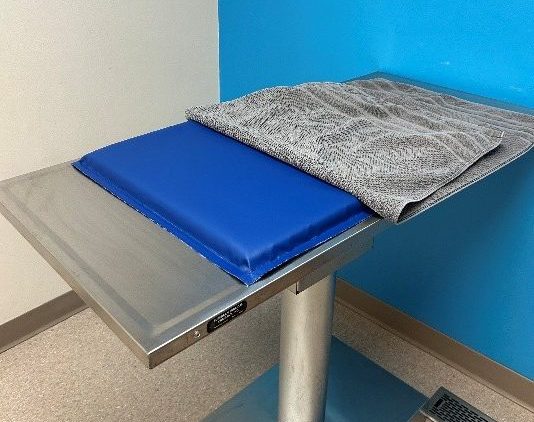
In the examination rooms, Dr. Guess provides extra padding for the kitties if they need to use the exam table by using cage pads in the photos, which are also easy to clean. They place a clean towel or blanket over pads for each patient, which helps make it a bit cozier for cats to sit on than the slippery pad. While Dr. Guess doesn’t typically use the exam table frequently when she is conducting an examination or obtaining lab work, she has a few staff members who are more comfortable drawing blood on the exam table. However, all of her staff are working on learning to draw blood where the cat is most comfortable, which can sometimes challenge the staff to move into some strange positions, ha!
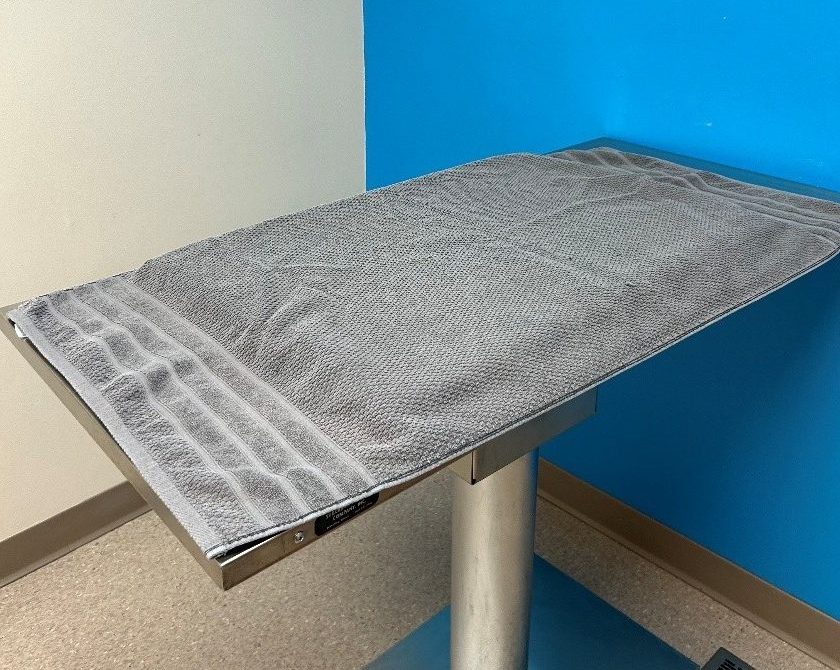
Article and images courtesy of Dr. Liza Guess
Cozy Carriers at the Practice
Ellen Carozza, LTS, VTS (CP-Feline), shared a Pro Tip regarding carriers. If cats are staying for day care or short treatments, she likes to let them have the bottom half of their carrier or provide them with the option to use the entire carrier as their safe space instead of a box or hut, so it smells like their home.
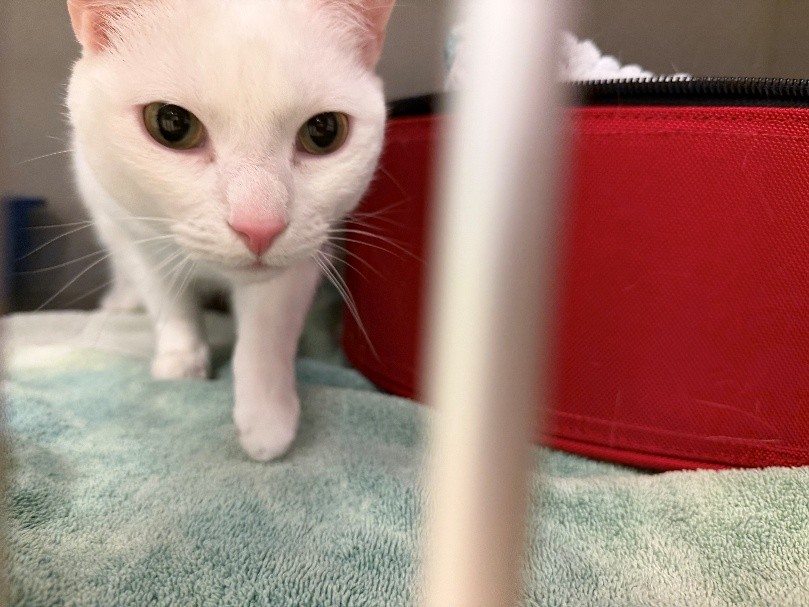
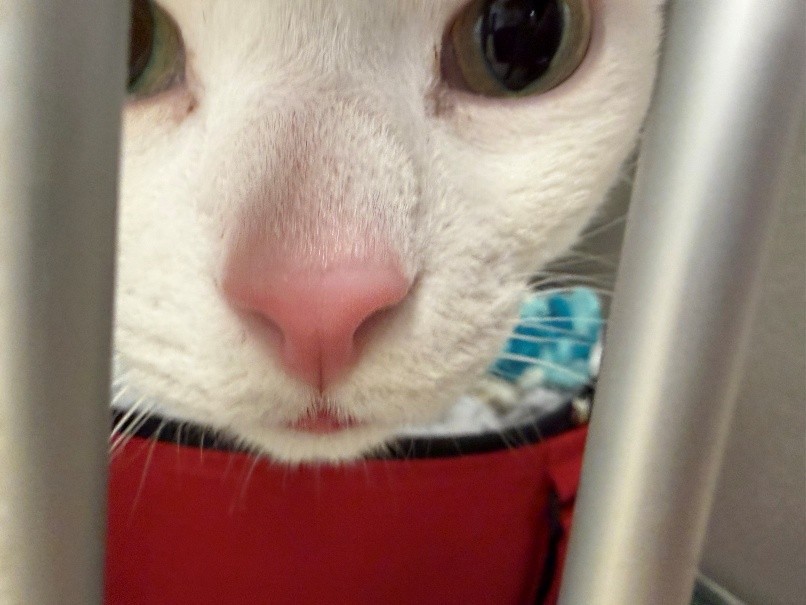
Article and images courtesy of Ellen Carozza, LTS, VTS (CP-Feline)
December 2025
The Cat Friendly Hideout Corner at Purrfect Care Feline Medical Center
I created a simple Hideout Corner in our cat-only exam room, where cats can retreat so they can feel a bit hidden and more in control while out of their home environment. When I have a cat use this Hideout Corner, I sit on the floor next to them, but with my back to the bench. This avoids any direct eye contact, and then I offer them a lickable treat or my knuckle from the side. This allows me to move slowly and ensure that my movements/behavior are non-threatening to them.
Please note: I want to be cautious with this recommendation written below, as it can make a cat feel cornered if they are approached head-on or if someone tries to pick them up.
Below is a picture of Merlin when he was in our office for an appointment. He is an older boy who was seeing us for an establishing examination/second opinion about his bad breath. Merlin was labelled as “aggressive” by his previous veterinarian, and his caregiver did not appreciate how he was handled (with big gloves) and talked about by the staff. The previous veterinarian prescribed gabapentin, and the caregiver had administered it so Merlin would be more prepared for his visit to our offices.
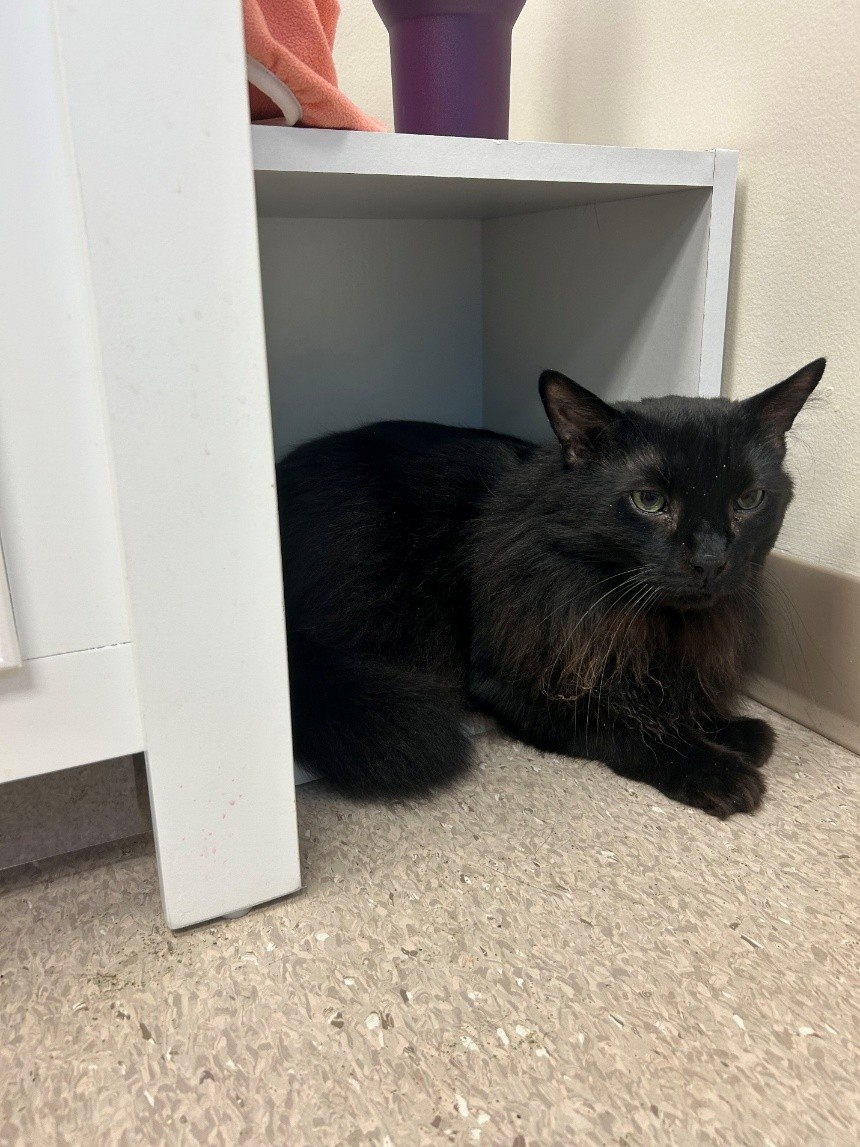
Merlin was really feeling his gabapentin that day. His caregivers brought him into our practice in a carrier, but we had difficulty removing the top. This did not make Merlin happy as he really wanted to get out of the carrier. As you can see from Merlin’s body language in the picture, he was feeling the emotions of fear-anxiety. So, once he was out of the carrier, he started looking for a place to hide in the exam room.
Merlin was still feeling very anxious in the Hideout Corner, but when I offered him my knuckle, he let me give him chin scritches. Merlin was not interested in any treats. I was able to briefly examine him and update his rabies vaccine while he was distracted with chin scritches by his caregiver, but his anxiety increased when I attempted the oral examination. Since he was so protective of his mouth, I suspected he was very painful. We made plans to have him come back again with pre-appointment anti-anxiety medication and to use injectable sedation to include an opioid (his first appointment was late in the day, so we didn’t want to sedate him right before the practice closed). He came back with our plan in place; it went very smoothly, and we were able to confirm gingivostomatitis on examination and draw blood in anticipation of full anesthesia for his dental procedure. His lab work was unremarkable, and he is scheduled for his dental procedure soon! We were sure to stress to the caregiver that Merlin is not an aggressive cat, but he was very scared and in pain. The caregiver said she was so grateful that we were so gentle and kind with him.
Additionally, I did once have a particularly fearful cat who was displaying very protective and repelling behaviors, so examining them in the carrier was not an appropriate option. This cat also felt more comfortable when they were able to retreat to the Hideout Corner. I carefully and very slowly covered the front with a towel. This helped lower some of the fear-anxiety and allowed me to be able to safely give her an injectable sedation.
So, this wasn’t an easy “we were able to do all the things because of this Hideout Corner” trick, but it did help the situation. It was a very successful appointment in the sense that we gained the caregiver’s trust, and we didn’t escalate Merlin’s fear and pain. The caregiver was more willing to make an additional trip back to the practice when she saw how gentle we were with Merlin compared to how he’s been treated in the past, and then scheduled his dental procedure with us (that will likely be very extensive!). This is a situation I see over and over with second opinions, and we have gained many loyal clients when they see how we interact with their kitties. It’s really one of my favorite things!
Article and image courtesy of Dr. Liza Guess
Cat Friendly Tips Toward Creating a Cat Friendly Culture
Veterinary Staff Team Members
- Ask the veterinary team members who are skilled in Cat Friendly handling to demonstrate their techniques to other staff. It is important that they see gentle handling in action so they can see how the cats and caregivers respond.
- When appropriate handling techniques are used, cat bite injuries and claw injuries decrease. Everyone’s stress level decreases!
- Discuss with staff why cats may feel the emotions of fear-anxiety at the veterinary practice.
- Empower your Cat Advocates to intervene when needed and help come up with new approaches for difficult situations.
- Listen to staff’s concerns so they feel heard and part of the learning process. This can help alleviate fears and make it easier for reticent staff to embrace the change in handling.
- Provide all staff with treats for cat visits. Being able to distract a cat with a treat can help lower the stress level for cats, clients, and staff.
Record Keeping
- Include an emotional medical record and keep track of past successful techniques for procedures like blood draws.
- Encourage staff to talk about what went well and what did not after a cat appointment. Then record this information in the client file and set an alert to review the file prior to their next visit, so all staff are prepared.
Environment
- Cat ward/Boarding – ensure you have larger cages that are not on the lowest level.
- Provide hidey houses and/or cat beds in all cages so cats have the ability to hide and perch.
- Use fans or white noise machines to minimize noise from other parts of the practice or hospital.
© Feline Veterinary Medical Association, 2026