
The FelineVMA acknowledges that essential to preserving the optimal physical, emotional, and cognitive health of our feline companions is providing them with an environment that meets their natural and normal behavioral needs.1 Several behavioral disorders2,3 and medical diseases4 seen in the feline patient are secondary to distress (an individual’s inability to cope) induced by an indoor-only living environment.5–8
Cats are highly intelligent, naturally curious, and active animals whom humans have chosen to take into their homes as companion animals. Many cats who live only indoors do not have their essential environmental needs met. The veterinary profession has an opportunity to educate cat caregivers on how to provide the fundamental requirements for a feline species-specific environment.3 Veterinary professionals also have the opportunity to educate caregivers about the additional work needed to meet these needs in households inhabited by two or more cats.3,5 Meeting each cat’s essential environmental needs by providing the five pillars of a healthy feline environment (Figure 1) will minimize their distress and the incidence of both behavioral disorders and stress-related medical diseases.
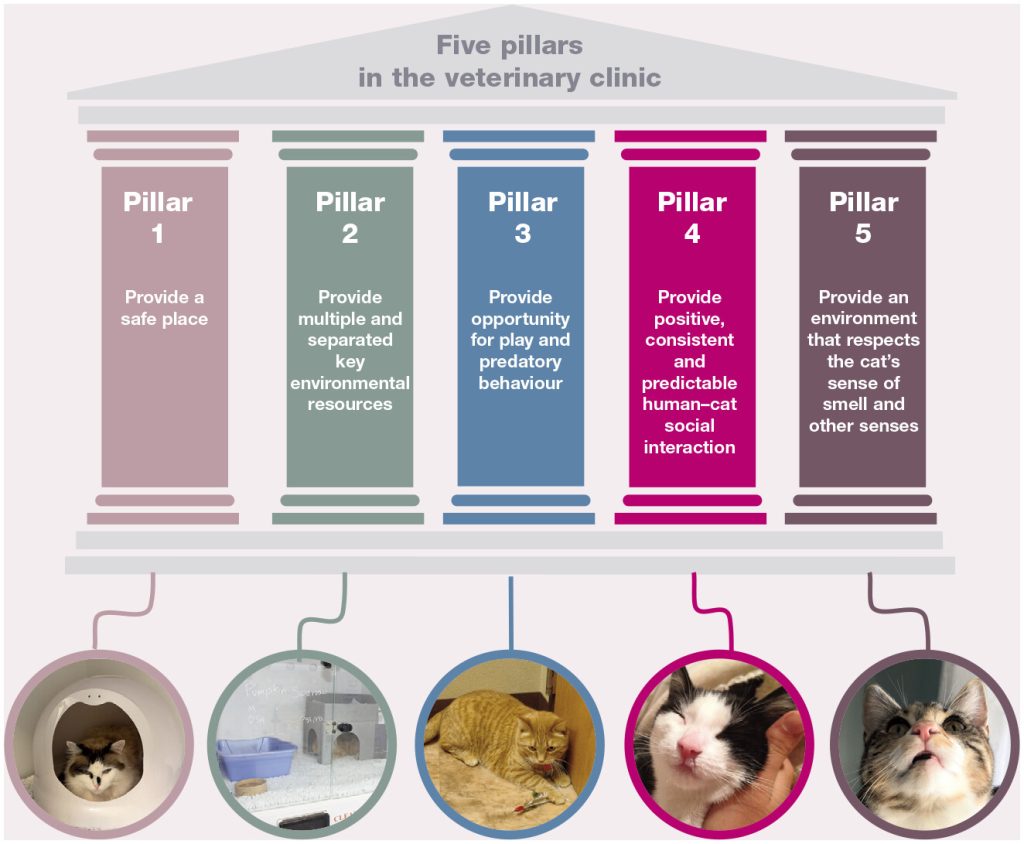
This Position Statement updates and replaces: 2019 Meeting the Physical and Emotional Needs of Owned Indoor Cats.
References:
- Ellis SLH, Rodan I, Carney HC, et al. AAFP and ISFM Feline Environmental Needs Guidelines. J Feline Med Surg 2013; 15: 219–230.
- Carney HC, Sadek TP, Curtis TM, et al. AAFP and ISFM Guidelines for Diagnosing and Solving House-soiling Behavior in Cats. J Feline Med Surg 2014; 16: 579–598.
- Rodan I, Ramos D, Carney H, et al. 2024 AAFP Intercat Tension Guidelines: Recognition, Prevention and Management. J Feline Med Surg 2024; 26.
- Quimby J, Gowland S, Carney HC, et al. 2021 AAHA/AAFP Feline Life Stage Guidelines. J Feline Med Surg 2021; 23: 211–233.
- Grigg EK, Kogan LR. Owners’ Attitudes, Knowledge, and Care Practices: Exploring the Implications for Domestic Cat Behavior and Welfare in the Home. Animals (Basel) 2019; 9: 978.
- Loberg JM, Lundmark F. The Effect of Space on Behaviour in Large Groups of Domestic Cats Kept Indoors. Appl Anim Behav Sci 2016; 182: 23–29.
- de Assis LS, Mills DS. Introducing a Controlled Outdoor Environment Impacts Positively in Cat Welfare and Owner Concerns: The Use of a New Feline Welfare Assessment Tool. Front Vet Sci 2021: 7.
- Ramos D. Common Feline Problem Behaviors: Aggression in Multi-cat households. J Feline Med Surg 2019; 21: 221–233.
Download Position Statement
© Feline Veterinary Medical Association, 2026